General
INDIA
The Central Pollution Control Board (CPCB) classifies an AQI between 0 and 50 as ‘good’, 51 and 100 ‘satisfactory’, 101 and 200 ‘moderate’, 201 and 300 ‘poor’, 301 and 400 ‘very poor’, and 401 and 500 ‘severe’.
 "general File image")
Add DNA as a Preferred Source
General TRENDING NOW
-
)
‘Yuvraj, wife left me’: Yograj Singh opens up on loneliness, says he’s ready to die
-
)
Mukesh Ambani sends a special jet to receive this unique sweet from a Uttar Pradesh village, it is…
-
)
Major blow to India as THIS Muslim country scraps visa-free entry due to…, government issues advisory
-
)
Sheikh Hasina’s son issues BIG warning ahead of Bangladesh verdict, says India is giving her…
-
)
Bombay HC issues notice on plea seeking CBI probe into Mukesh Ambani’s Reliance’s alleged USD 1.55 billion ONGC gas theft
-
)
Lalu Yadav breaks silence after daughter Rohini Acharya’s public comments: ‘Internal dispute will be…’
-
)
IPL 2026: Predicted Indian and overseas targets for CSK in Auction, remaining purse and more
-
)
Meet Lalu Yadav’s 7 sons-in-law, Rohini Acharya’s husband is…, know about their educational qualifications, profession and more
-
)
120 Bahadur first review out: Farhan Akhtar-starrer war drama ‘deserves standing ovation’, says Army Chief General Dwivedi
-
)
Baba Siddique murder case: Anmol Bishnoi, Lawrence Bishnoi’s brother, deported from US to India
-
)
School holiday on November 19: Schools to remain closed in THESE states today due to…
-
)
Delhi Blast: FIRST image of ‘Madam Surgeon’ Shaheen with Maruti Brezza surfaces amid terror module probe
-
)
Delhi Blast: Al-Falah University founder Jawad Ahmad Siddiqui arrested in money laundering case
-
)
Odia singer Humane Sagar passes away at 34 due to…
-
)
Saudi Arabia: What is Umrah insurance policy? Bus fire victims to receive Rs 23,63,300
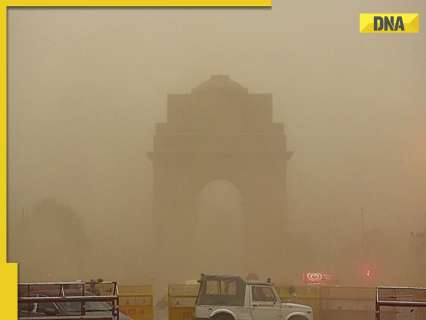
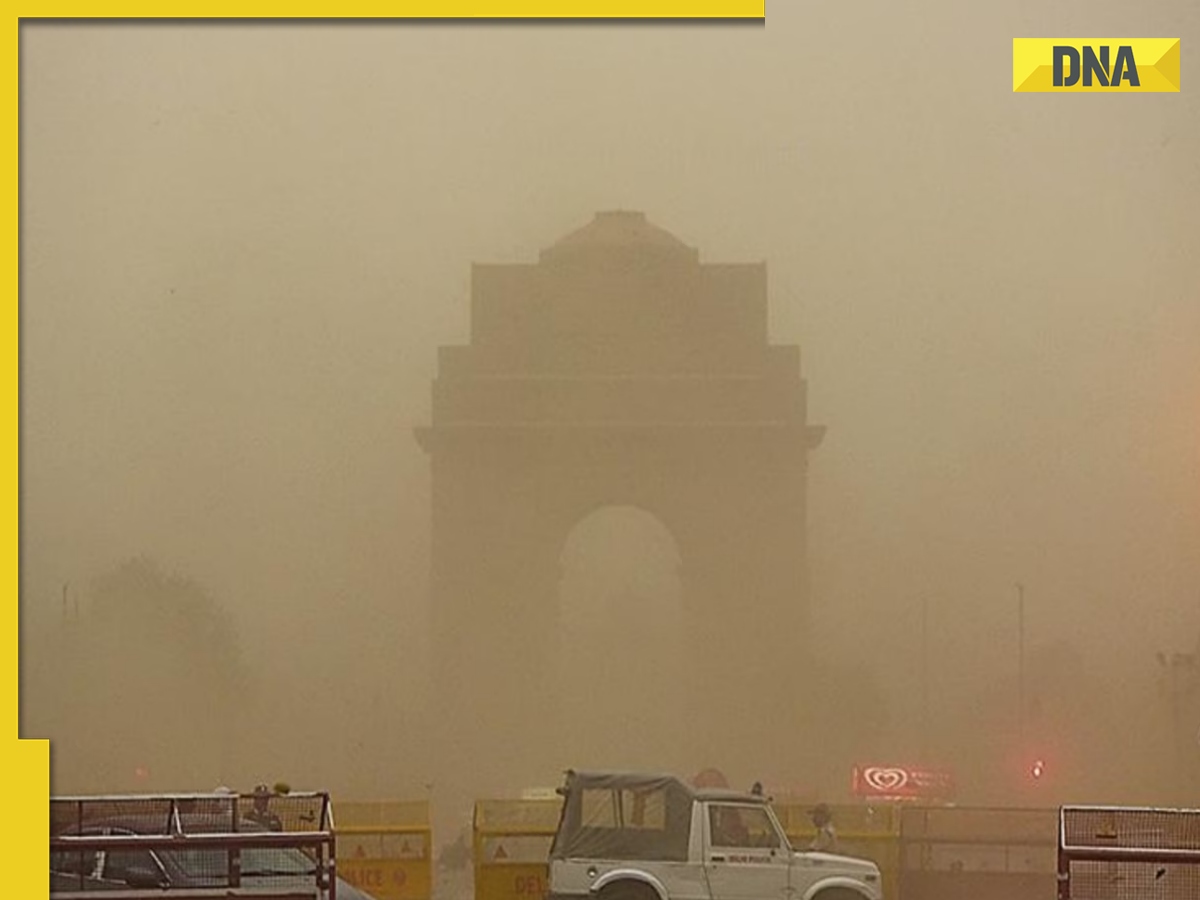
Since last week, when the Commission for Air Quality Management (CAQM) activated GRAP Stage 3 restrictions, Delhi’s air pollution situation has been stagnant. According to data from the Central Pollution Control Board (CPCB) at 5:30 am on November 19, the national capital had an average Air Quality Index (AQI) of 386, which is in the ‘very poor’ level.
Sixteen of the 39 air quality monitoring stations in Delhi-NCR scored an AQI in the ‘severe’ category, which is higher than 400. With an AQI of 446 on a 500-measurement scale, Wazirpur had the poorest air quality, while Bawana station had an AQI of 444. The AQI in Jahangirpuri was 442. The stations in the 430-440 AQI range were Chandni Chowk, Ashok Vihar, DTU, and Vivek Vihar.
Sonia Vihar, Rohini, RK Puram, Punjabi Bagh, North Campus, Nehru Nagar, Narela, Mundka, and Anand Vihar were among the other places in Delhi that reported an AQI value above 400, according to data on the CPCB’s Sameer app.
A number of pollution control measures were put in place after GRAP Stage 3 restrictions, including prohibitions on construction activities, water spraying on roadways, and limitations on traffic on Delhi-NCR routes. Primary classes in Delhi schools switched to hybrid mode in response to the concerning pollution levels.
Sonia Vihar, Rohini, RK Puram, Punjabi Bagh, North Campus, Nehru Nagar, Narela, Mundka, and Anand Vihar were among the other places in Delhi that reported an AQI value above 400, according to data on the CPCB’s Sameer app.
A number of pollution control measures were put in place after GRAP Stage 3 restrictions, including prohibitions on construction activities, water spraying on roadways, and limitations on traffic on Delhi-NCR routes. Primary classes in Delhi schools switched to hybrid mode in response to the concerning pollution levels.
Moving on to areas near the capital, we discover that the AQI was 450 in Greater Noida, 410 in Noida, 435 in Ghaziabad, 234 in Faridabad, and 288 in Gurugram.
General GRAP-IV not invoked in Delhi-NCR
On Tuesday, November 18, the Commission for Air Quality Management (CAQM) clarified that reports that Delhi-NCR has advanced to Stage-IV of the Graded Response Action Plan are false and advised the public to disregard such incorrect information.
The CAQM claimed in a statement that “misleading information” about the imposition of the highest level of emergency restrictions in Delhi-NCR was being spread by certain news channels and digital platforms.
It emphasised that the Graded Response Action Plan (GRAP) is still in effect throughout the NCR in Stage-III rather than Stage-IV.
“At present, the Stage-III of the extant GRAP is in force across the entire NCR. Stakeholders and the public are advised to rely only on official updates/press releases issued by the CAQM for NCR and adjoining areas,” it said.
When the Air Quality Index (AQO) hits the “severe” level, Stage-III of GRAP enforces strict regulations.
An AQI between 0 and 50 is categorized as “good” by the Central Pollution Control Board (CPCB), “satisfactory” between 51 and 100, “moderate” by 101 and 200, “poor” by 201 and 300, “very poor” by 301 and 400, and “severe” by 401 and 500.
Increased industrial pollution controls, prohibitions on non-essential construction and demolition activities, limitations on the use of diesel generators, and improved mechanical sweeping and water spraying on highways are all part of the Stage-III measures.
To stop future worsening of the air quality, government agencies may also impose stricter traffic management and restrictions on specific polluting enterprises.
The curbs become much more sweeping under GRAP Stage-IV, the emergency level.
All construction operations are usually prohibited, polluting trucks are prohibited from entering Delhi, schools and non-essential commercial activities are closed, and private vehicles may be subject to restrictions based on odd-even (registration number) or similar schemes.
Find your daily dose of All Latest News including Sports News, Entertainment News, Lifestyle News, explainers & more. Stay updated, Stay informed- Follow DNA on WhatsApp.