
Watching that inbox after sending a pitch feels like waiting for water to boil. Three days pass, then five, then a week, still nothing.
The silence from a journalist can mean a lot or maybe nothing at all. Following up with the media is tricky because we want to stay on their radar without coming off as pushy.
The key is knowing when and how to reach out again with respect and relevance. If we master this balance, our chances of getting noticed improve a lot. Let’s explore how to follow up with the media professionally so our pitches don’t get lost or ignored.
Key Takeaways
- Wait 3 to 7 business days before following up on a PR pitch
- Keep follow-up messages short, polite, and personal to the journalist
- Add fresh angles or new info to make the follow-up worth their time
How to Follow Up PR Pitch
The inbox is a battlefield these days, and journalists get hundreds of pitches every week (some get that many in a day). Smart follow-up means picking your moment.
Three to seven business days usually hit the sweet spot – long enough to show respect for their packed schedule, but not so long that your story goes stale.News cycles matter too.
Nobody’s gonna read your pitch during a major breaking news event, and journalists don’t appreciate the distraction. Better to catch them when things are quieter, or right after the dust settles on a big story.
There’s no perfect formula, but paying attention to their publishing patterns helps. When you do follow up, start with a quick reminder. “Just checking in about the [whatever] story from last week” works fine.
Don’t rewrite the whole pitch – they probably remember it, or can find it if they’re interested. Keep it short, maybe three sentences tops.
Staying organized saves everyone headaches. Track who you contacted, when, and what you said.
Two or three follow-ups max before moving on – anymore and you’re just being that person. Some PR folks use fancy software for this, but a simple spreadsheet works just as well.
Phone calls can work in emergencies (like breaking news), but email’s usually best. It gives journalists space to respond when they can, and keeps a paper trail.
Some reporters hate calls, period. Learn their preferences and stick to them – it’s just basic professional courtesy. [1]
What to Say in PR Follow Up
Credits : Sujan Patel
Nobody likes those awkward follow-up moments. The blank screen stares back, and finding the right words feels impossible.
But here’s what actually works: “Hi [Name], hope your week’s going well. Just circling back about the [story] pitch from [date].” Simple, straight to the point, no fancy stuff needed.
Adding a personal touch makes all the difference. Maybe mention their latest article or how the story fits their beat.
Not the fake “I’m your biggest fan” stuff – journalists see right through that. Just honest connections that show you’ve done your homework.
Fresh angles or new data can save a dying pitch. Got updated numbers? A better source? Lead with that. Even something like “We just got some interesting data that adds a new dimension to the story” can get their attention.
The worst thing? Coming off desperate or pushy. Drop those “just checking in” or “did you get my email” lines.
They’re about as welcome as spam. Instead, keep it professional: “Let me know if you’d like more information” works just fine.
End it gracefully. “Thanks for your time” or “Looking forward to hearing your thoughts” leaves the door open.
After two tries with no response, take the hint and move on with a simple “Thanks for considering the pitch.”
Adding Value in Follow Up Messages
Standing out in a journalist’s inbox feels like trying to catch someone’s attention in a packed stadium. These folks wade through hundreds of pitches every week – some get that many before lunch.
So when you follow up, you better bring something worth their time. New angles work.
Maybe there’s a fresh industry trend that ties in perfectly, or that expert source finally agreed to go on record. Even better if you’ve got exclusive data nobody else has seen yet.
“We just wrapped up our quarterly research” or “Our CEO can offer insight on yesterday’s market shift” – that kind of stuff gets noticed. Numbers talk, but they better be real.
Nothing kills credibility faster than fudged stats or stretched claims. Sometimes it’s the smaller details that make the difference – a clarifying point about the original pitch or some context that makes the story more timely.
The magic word? Exclusive. Telling a journalist they’ll get first dibs on a story can turn heads fast.
But here’s the thing – don’t play games with exclusivity. Promise it to one reporter, then leak it to another? That’s a quick way to end up on everyone’s blacklist.
Media folks talk to each other more than you’d think, and word gets around about who can’t be trusted.
Maintaining Professional Media Communication
It’s all about respect. Journalists work crazy hours, chase impossible deadlines, and juggle way too many stories at once.
If they don’t answer right away (or ever), it’s probably not personal. When they say no or ask you to stop following up, that’s it.
Game over. Thank them and move on. There’s always next time, but only if you don’t burn that bridge now.
Keep track of who you talk to and what they like. Old school spreadsheet or fancy software – doesn’t matter.
Just know who covers what, when they last heard from you, and what they actually care about. That’s how you build relationships that last. [1]
Practical Tips for Effective Media Follow-Up
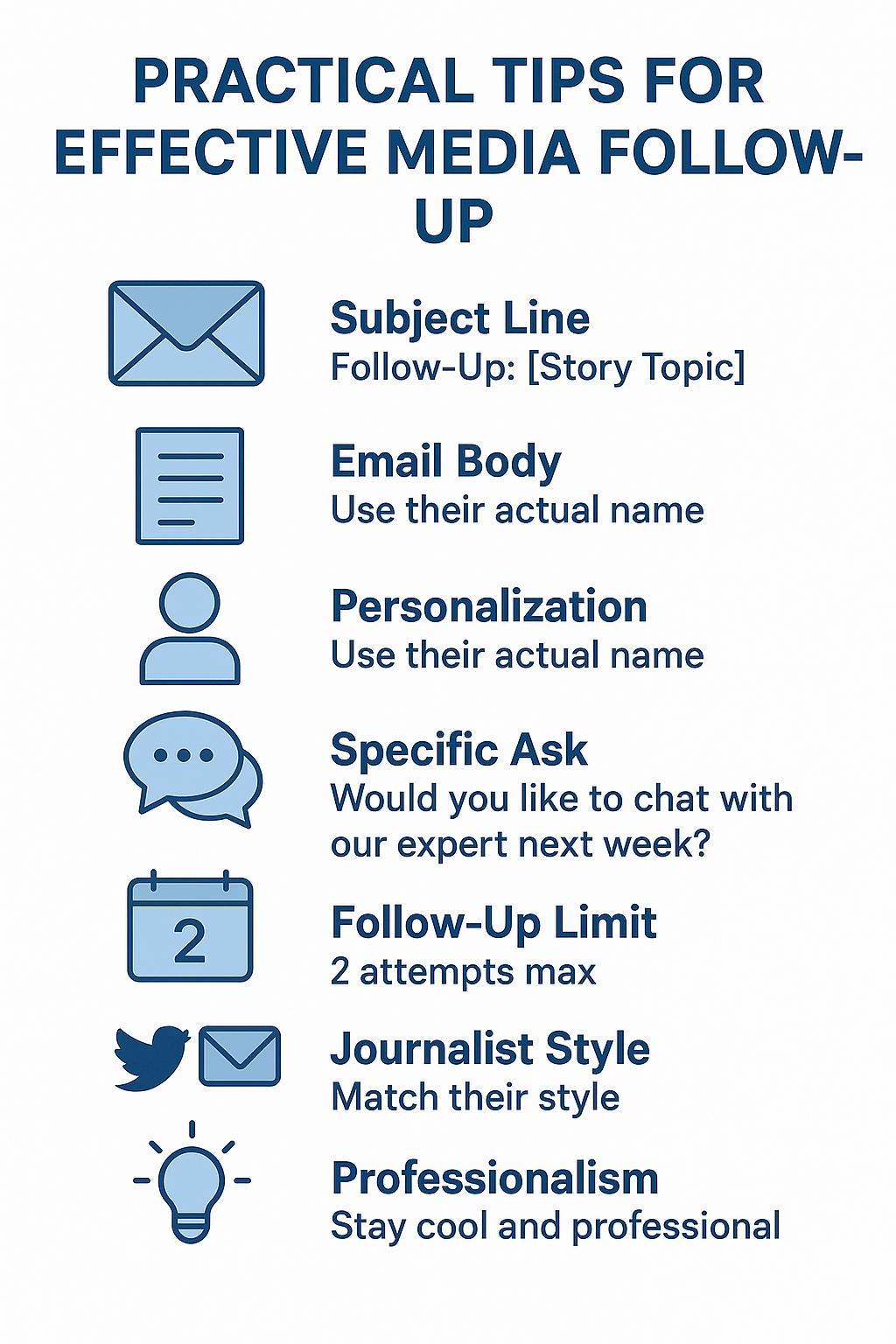
Following up with journalists isn’t rocket science, but getting it right makes all the difference. Smart PR folks know the drill: Start with a subject line that gets straight to the point – “Follow-Up: [Story Topic]” works better than some creative writing experiment.
The body of the email shouldn’t look like a novel. Three short paragraphs, max. Nobody’s got time to read your manifesto, especially not busy reporters on deadline. And please, use their actual name – “Dear Sir/Madam” went out with fax machines.
Ask for something specific: “Would you like to chat with our expert next week?” beats vague hints any day. But don’t go overboard with the follow-ups.
Two attempts after your first pitch, then let it go. Some PR people can’t take a hint and keep hammering away – don’t be that person.
Watch how the journalist works. Some live on Twitter, others stick to email.
Match their style. And before you hit send on that follow-up, make sure you’ve got something new to say.
Maybe it’s fresh data, maybe it’s a better angle – just make it worth their time. Keep it professional, even when they ignore you (and sometimes they will).
Getting frustrated won’t land you that story, but staying cool might get you the next one. [2]
FAQ
How does media follow-up improve media relations and media pitch follow-up?
Media follow-up strengthens media relations by keeping the conversation going after a pitch. A thoughtful media pitch follow-up shows professionalism and persistence without being pushy.
Journalist follow-up messages help build trust and keep your story top of mind, which can turn a one-time pitch into a lasting relationship.
What are the best media follow-up techniques and PR follow-up best practices?
Strong media follow-up techniques start with smart media outreach and well-timed PR follow-up. A press follow-up email should be short, relevant, and respectful of deadlines.
Media follow-up best practices include using clear follow-up content, setting realistic follow-up deadlines, and applying media engagement tactics that focus on relationship-building rather than repeated reminders.
How can a pitch follow-up email or PR email follow-up boost media pitch success?
A clear pitch follow-up email or PR email follow-up improves media engagement by keeping your idea visible. Success often depends on the follow-up email subject line and the tone of your message.
Adding media pitch updates, a new angle pitch, or concise follow-up content shows persistence while giving value. This balance can greatly improve media pitch success.
Why is media pitch timing and follow-up timing important when following up with reporters?
Media pitch timing and follow-up timing matter because they affect how your outreach is received. Sending a pitch too soon can feel pushy, while waiting too long may lose momentum.
Media follow-up etiquette suggests giving reporters space, then following up with a short, respectful note. Using a steady media pitch cadence and understanding journalist deadlines helps improve response rates.
Conclusion
Following up with the media professionally means more than just persistence. It’s about showing respect, choosing the right timing, and offering something valuable.
When we send thoughtful, personalized follow-ups at the right moment, we build better relationships with journalists. This approach increases the chance that our stories get noticed and covered.
Keeping these principles in mind helps ensure our pitches don’t just disappear, they get read and seriously considered. That’s the outcome we really want.
For brands looking to maximize their media outreach, NewswireJet offers a simple, affordable way to distribute press releases and get featured on top outlets like NBC, CBS, Google News, and Yahoo.
References
- https://www.bu.edu/comtalk/files/2012/11/Maximizing-Media-Relations.pdf?
- https://en.wikipedia.org/wiki/Media_relations?