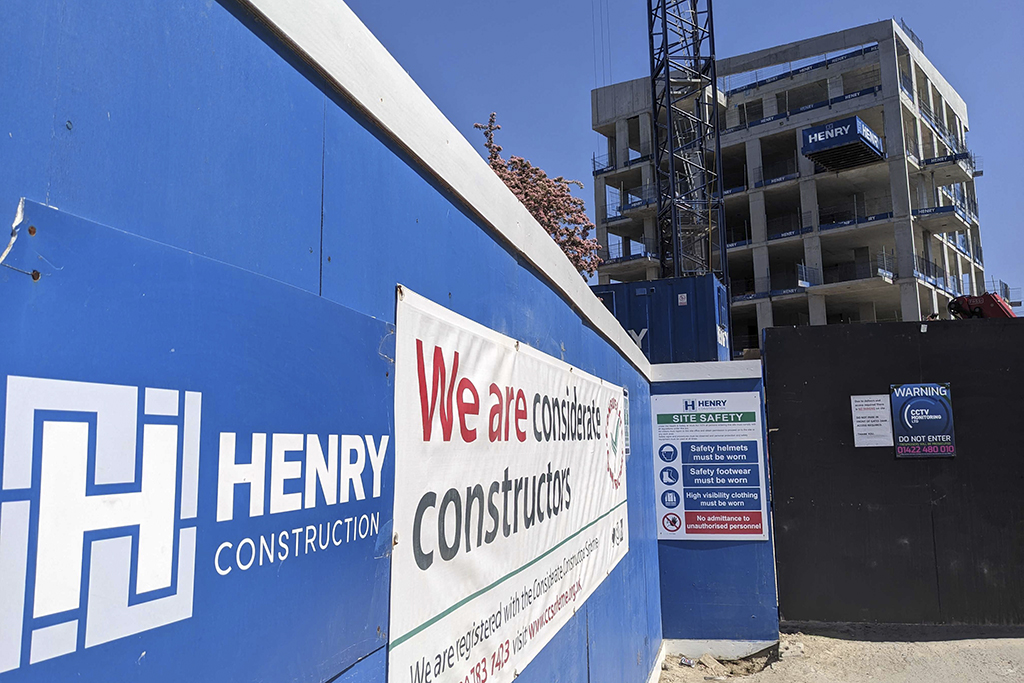
Former directors of Henry Construction Projects insist £8.5m of payouts to family members in the run-up to the firm’s collapse were part of legitimate intercompany arrangements rather than a last-minute cash grab.
In June, Construction News revealed that administrators had launched a High Court claim alleging payments from the firm for a family home and relatives’ tax bills were made unlawfully, and seeking repayment.
Now, a defence document filed with the court by six family members and former directors refutes all accusations of wrongdoing. It argues that the payments were made in accordance with a legitimate intercompany arrangement.
The administrators’ claim alleged that the payments showed “a pattern of conduct by Mark Henry” to pay sums from his companies to “connected persons shortly before they entered insolvency”.
But the defence document says: “The defendants deny liability on all fronts.
“The sums […] were lawfully paid out by the claimant to various recipients from which the claimant derived benefits.”
In their new filing, the defendants argue that Henry Construction had an agreement to offset debts it owed to Keash Properties Limited (KPL), run by former director Mark Henry’s wife, Therese Woulfe, by making payments directly to members of the Henry family.
This “business arrangement” is said to have evolved from an earlier agreement known as the “Project Companies Accommodation”, in which family funds were routed through related companies to support the cashflow of the parent firm, Henry Group.
The arrangement “reflected a genuine means of resolving outstanding debts owed by making adjustments to intercompany balances”, the court document says.
Henry Construction Projects “derived a benefit from the business arrangement as it was able to offset sums it owed to KPL”, it adds.
What do Henry Construction Projects’ former directors and family members say about the allegations against them?
House deposit
Disputed amount: £3.3m (including interest)
The claim: Henry Construction Projects improperly paid a deposit, completion payment and stamp duty on a £6.1m mansion for Mark Henry and his wife, Therese Woulfe.
The defence: Mark Henry and Therese Woulfe were owed considerable sums by the firm from a variety of sources and Mark Henry’s loan account should have appeared in credit, according to the defendants. “The claimant’s accounts and bookkeeping team had been assigning the majority of debits to Mr Henry’s director’s loan account (DLA) when these debits did not necessarily reflect the accurate position of who incurred them.” Money owed to Mark Henry included debts from the “business arrangement” with KPL, mileage claims and other expenses, income from a yard owned by the family and rented out to Henry Construction Projects, plus “significant sums for unpaid remuneration”. “It is denied that those payments were made in breach of fiduciary duty or unconscionably received.”
Elizabeth Henry tax payments
Disputed amount: £686,000 (including interest)
The claim: Between 30 September 2021 and 28 January 2022, the company improperly paid a total of £1m to HMRC for personal tax liabilities owed by Mark Henry’s mother, Elizabeth. The administrators are seeking repayment minus the outstanding balance on Elizabeth Henry’s loan account, plus interest on the amount owed.
The defence: Elizabeth Henry and her late husband, William, sold their shares in the company for approximately £20m, which triggered a tax liability of around £2m. Rather than retaining a portion of the proceeds to cover this liability, they agreed under the KPL business arrangement to pay the entire £20m back through various entities. This allowed the firm to benefit from the full amount and improve its financial standing for borrowing, capital-raising and bond purposes. In return, the company agreed to cover the Henrys’ resulting tax liabilities when they became due.
William Henry tax payments
Disputed amount: £952,500 plus interest
The claim: Between 31 January 2022 and 1 June 2022, the company improperly paid a total of £952,500 to HMRC to settle the personal tax liabilities owed by Mark Henry’s father, William.
The defence: The tax payments were “appropriate” given the agreement in which the Henrys handed over their full £20m share sale proceeds to Henry Construction Projects on the understanding that the claimant would later handle the tax payments.
Mark Henry loan account
Disputed amount: £306,000 (including interest)
The claim: The company paid off Mark Henry’s loan account seven days before Henry Construction Projects went into administration, constituting a breach of fiduciary duty and potential fraud by company directors.
The defence: Mark Henry does not owe any money to the administrators because money owed to him had not been properly accounted for. The administrators’ records fail to show unallocated sums that should have been credited to Mark Henry. The defendants further deny that money was actually credited to his DLA on 1 June 2023. They argue that this entry, like others, was part of a wider balancing approach agreed under the “business arrangement”. For example, they say, Therese Woulfe’s own DLA was also zeroed out on the same day, even though it was in credit, to reflect this neutral accounting treatment. The defence maintains that these adjustments were not genuine repayments or credits, but part of an agreed method for settling internal accounts without creating actual financial obligations.
Payments on behalf of Mark Henry’s sister and her husband
Disputed amount: £922,000 (including interest)
The claim: Between 4 September 2020 and 20 February 2023, the company improperly incurred and/or paid expenses of at least £776,669 to demolish a property bought by Sarah and Sean Dundon and to rebuild it.
The defence: The defendants claim there is no solid evidence for the figure claimed. In addition, while they accept Henry Construction Projects entered into a standard JCT design-and-build contract on 15 October 2020 to carry out work for the couple, the defence argues that the contract contains its own dispute-resolution process, making this current legal action inappropriate.
Loan repayment to Mark Henry’s sister and her husband
Disputed amount: £100,000 plus interest
The claim: On 26 May 2023, Henry Group Holdings transferred the sum of £100,000 to Sarah Dundon to repay part of a £420,000 loan the Dundons had made to the company. This counted as an improper preferential payment, made three weeks before the “onset of insolvency”.
The defence: The defendants say that the loan was repayable on demand and that the repayment request was legitimate. When Sarah and Sean Dundon sent a letter on 19 May 2023 demanding immediate repayment, implicitly threatening legal action, the directors decided to make a partial repayment on behalf of Holdings to avoid litigation. At the time of the payment there was no reason to believe Holdings was unable to meet its debts.
Payment to Mark Henry’s wife
Disputed amount: £132,000 plus interest
The claim: On 23 May 2023, shortly before Henry Construction went into administration, a payment of £132,000 was paid to Therese Woulfe by Henry Construction Projects for providing health and safety and mental health training. This counted as a preferential payment.
The defence: The payment to Therese Woulfe, the defence document says, was consistent with paying ongoing creditors and fulfilling existing contractual obligations, especially for services that supported the company’s operations and workforce wellbeing. The defendants deny that the payment’s timing indicates any intention to favour her over other creditors, stating it was a routine commercial transaction for properly invoiced services.