Education
Colleges are eliminating or consolidating programs, sometimes dozens of them on a single campus.
By Alan Blinder, New York Times Service
6 minutes to read
Share
Share
Send this article to your social connections.
American higher education is lurching into an era of austerity.
The nation’s colleges and universities are confronting a series of financial crises — fueled only in part by the White House — that are prompting layoffs, pushing costs higher and leaving the academic experience in flux.
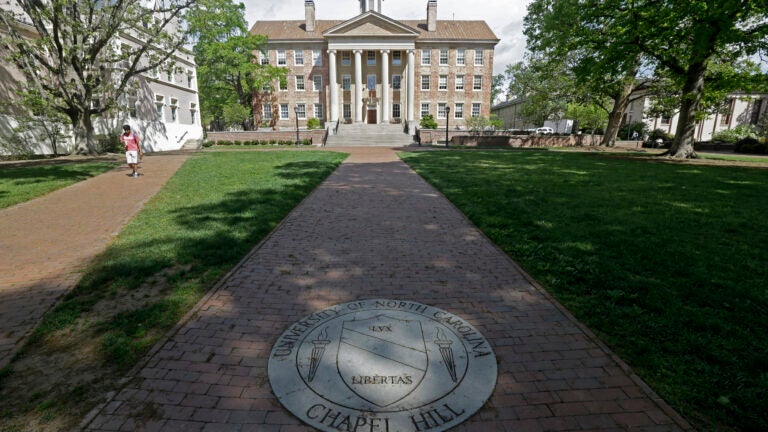
Colleges are eliminating or consolidating programs, sometimes dozens of them on a single campus. The University of North Carolina at Chapel Hill is planning to more than halve its financial aid budget for out-of-state students. From coast to coast, graduate schools are admitting fewer applicants.
The financial squeeze comes just as demographic trends point toward plunging enrollments in the coming years that could force further belt-tightening.
Although months may pass before some of the most drastic shifts take effect, students and administrators alike are facing uncertainty over how much a school could potentially change over the course of a semester, much less an entire degree program.
Some of the turmoil traces directly to the Trump administration, which has been seeking to punish a clutch of elite schools. It is also, more broadly, trying to transform the financial ties between Washington and the nation’s colleges.
But budgets are falling at schools across the spectrum, whether they are state flagships, wealthy private institutions, liberal arts schools, regional public universities or community colleges. For many, the reasons have nothing to do with the federal government. They include:
- Rising administrative and support costs, which have soared in recent decades, even as state legislatures have tightened public spigots.
- Higher tuition prices, among other considerations, which have turned off students, who are routinely paying more and oftentimes getting less.
- Some academic programs that draw few students.
“How many of you think we’re on a roller coaster?” Richard J. Bailey Jr., the president of Southern Oregon University, asked this month at a town hall meeting, during which he outlined a proposal for deeper cuts at a school already battered by them.
The new plan calls for the elimination of 15 of the school’s 38 academic majors, including chemistry, economics, international studies and Spanish. Dozens of jobs may be cut, including 29 faculty positions, as the university looks to become a $60 million-a-year operation, a decrease of 15%.
The university, in Ashland, Oregon, eliminated 82 jobs just two years ago, but school officials think their workforce is still far too large. By their calculations, the school has enough employees to support 7,500 students — about 4,000 more than it is actually enrolling. But the strategy is still stirring agony.
“We are very affected by these decisions,” Lupe Sims, an alumna, told Bailey as she discussed proposed changes to the Native American studies program. “And you want more retention? We need to be present at this university.”
Bailey spoke of three different eras for 21st-century American higher education. The first decade, starting in 2000, was the boom times of “more with more.” Then came the “more with less” stretch. The 2020s, he said, are emerging as the “less with less” period.
During the coronavirus pandemic, undergraduate enrollment dropped nationwide, and many students said the expense had made them rethink their college plans. But even before that, the number of students enrolling in college had been ticking downward.
As enrollment declines and universities reckon with staffing levels and programs that no longer match the number of students on campus, the cuts in many places are something of a market correction.
Even schools like UNC, where enrollment is robust, are trying to adjust to financial uncertainty. Lee H. Roberts, UNC’s chancellor, said his discussions with his counterparts routinely focused on finances, especially around federal research funding.
Higher education leaders are grappling with how to weigh difficult trade-offs. Student support services, like academic advising, writing centers and counseling, can be expensive. But they often improve students retention and lead to better outcomes, which might help pave the way to reversing the declining public confidence in higher education.
Some administrators acknowledge that personnel budgets have grown too large and that rising, complex tuition pricing discourages some prospective students. They have also been unable to dodge broader economic trends.
“Our revenue has not kept pace with expenses,” Rodney D. Bennett, the chancellor of the University of Nebraska-Lincoln, wrote this month, noting inflation and the high costs of health care, insurance premiums and utilities, among other headwinds.
The school will seek more than $27 million in cuts by the end of 2025, and Bennett said there would be an “intentional review of academic programs for potential elimination or mergers.”
Leaders at UNC are looking to cut $69.5 million over the coming years, or roughly 2% of the operational budget. The strategy, outlined in a presentation to the university’s board, includes potential savings of more than $17 million by changing financial aid offerings for out-of-state students. But university officials are also looking to reduce the administrative staff and scale back “low-performing academic programs” for another $10.5 million.
Roberts said UNC, a leading recipient of federal funding, was facing a murky state budget outlook that was challenging administrators. He said the university’s proposal was “trimming the branches” rather than “clear-cutting the forest.”
“We think it’s just prudent to try to be thoughtful about how we’re spending our resources, given the uncertainty,” said Roberts, who nevertheless said university officials were prepared to spend more on services like student advising.
More than 250 faculty members at nearby Duke University are weighing “voluntary retirement incentive offers” after administrators announced that 599 staff members had taken exit packages. The university is also in the midst of layoffs.
Other schools are facing pressure from statehouses. This year in Utah, for instance, lawmakers gave public colleges and universities months to identify ways to cut instructional costs by 10%.
Now the schools, which can regain funding if they use the money for high-demand fields like nursing and engineering, have three years to act.
The University of Utah intends to shut down about 80 “inactive courses and degree programs” that have had scant enrollment, including graduate programs in audiology, physical therapy and a handful of fine-arts disciplines. Salt Lake Community College proposed eliminating a blend of degree and certificate programs. Snow College looked to get rid of convocation. Weber State University has moved to drop 31 programs that serve 209 people.
And then there is the White House’s ire, which has so far directly fallen on some elite schools. The toll, though, has been immense, with billions in federal research funding upended. Harvard University, which has sued the government, said last month that assorted federal actions, like the research cuts and a tax increase on the largest university endowments, could affect its budget by close to $1 billion a year.

The federal government is also seeking a settlement of more than $1 billion with UCLA. The leader of the University of California system, James B. Milliken, warned Friday that such a payment “would completely devastate our country’s greatest public university system as well as inflict great harm on our students and all Californians.”
But Northwestern and Cornell universities, which have both tangled with the government, have acknowledged that some of the strain they are under has little or nothing to do with President Donald Trump.
“We want to be clear that the financial measures we have taken this spring and summer — including layoffs — are in response to more than just the federal research funding freeze,” Northwestern’s leaders wrote last month as they announced the elimination of about 425 jobs, ticking through a list of explanations that included labor contracts and surging health care costs.
“Even when federal research funding is restored — no matter what that may look like — it will not be enough to reverse the actions we are taking now,” they added.
The consequences for students will assuredly vary from campus to campus, but they are likely to be greatest at places that cut academic programs or support services.
Some schools have said that their budget cuts were carefully designed not to interfere with student experiences, or at least to limit the repercussions.
A spokesperson for Boston University, which said in July that it intended to eliminate about 240 jobs, said school officials “don’t expect students will be affected.”
“Part of the reason for the cuts was to be fiscally responsible so that we have the resources to invest in our priorities for the future of the university,” the spokesperson, Colin Riley, wrote in an email. “And providing an excellent, transformational experience for our students is among our highest priorities.”
Most worrisome to many administrators, though, is the mounting sense that no reprieve is coming soon from Washington or anyplace else.
“There are a lot of good leaders, and they’re trying to do the best they can, and we are going to continue to push on them,” Bailey, the Southern Oregon president, said. “But I want you to hear this from me: They are not coming to our rescue.”
This article originally appeared in The New York Times.
Extra News Alerts
Get breaking updates as they happen.