General
Prime minister Narendra Modi on Monday attacked Congress and said that tribal regions and districts in the northeast suffered the most, and villages near the border were dismissed as “last villages” by the earlier dispensations. This neglect, he said, led to the continuous migration from tribal and border areas.
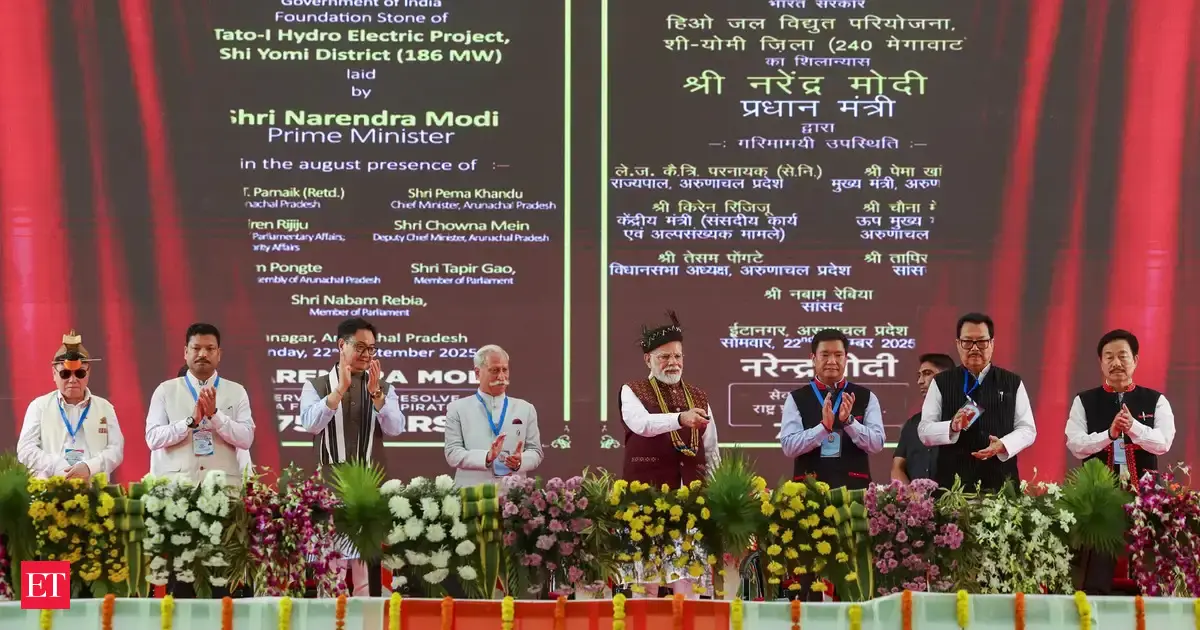
The PM said this after laying the foundation stone and inaugurating projects worth over ₹5,100 crore in Itanagar, Arunachal Pradesh. He announced that two new power projects will strengthen Arunachal’s position as a power producer, generate employment, and provide affordable electricity for developmental activities.
Modi interacted with local entrepreneurs and members of self-help groups in Itanagar. He also visited an exhibition that was organised at the venue of his public meeting in Indira Gandhi Park and interacted with the people there, officials said.
Pointing out that while Arunachal Pradesh is the first to receive the rays of the sun, he said it was unfortunate that the rays of rapid development took several decades to reach the region. The PM criticised Congress for its longstanding tendency to avoid difficult development tasks, which adversely impacted Arunachal and the entire northeast. He noted that challenging terrains, mountainous regions and forested areas were often declared backward and neglected by the Opposition party.
Modi said the districts previously labelled as “backward” by earlier dispensations have been redefined as “aspirational districts” and prioritised for growth. Border villages once dismissed as “last villages” have now been recognised as the nation’s “first villages,” he added.
He emphasised that Arunachal’s tourism strength goes beyond nature and culture, pointing to the global rise of conference and concert tourism. Modi announced that the upcoming modern convention centre in Tawang will add a new dimension to the state’s tourism landscape.