General
ANALYSIS
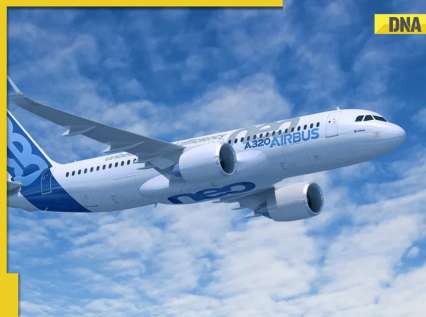
Recently, a JetBlue flight was cruising from Cancun to Newark when suddenly, without any warning or pilot input, the plane’s nose dipped sharply downward.
 "general The ELAC Glitch: The Sun's Radiation That Grounded Half the World's Airbus A320 Fleet")
Add DNA as a Preferred Source
General TRENDING NOW
-
)
DGCA’s BIG move amid Airbus software update alert, grounds THESE aircrafts
-
)
Mukesh Ambani makes BIG announcement, set to invest Rs 98000 crore in Andhra Pradesh to build…
-
)
Mary D’Costa BREAKS her silence on Smriti Mandhana-Palash Muchhal’s wedding controversy, says, ‘exchange of chats…’
-
)
Smriti Mandhana, Palash Muchhal make BIG move after wedding postponement amidst cheating rumours, add…
-
)
Pakistan ex-PM Imran Khan is alive or dead? Adiala jail authorities break silence on his health, says, ‘truth…’
-
)
Dharmendra never won Best Actor Filmfare Award despite 4 nominations in 65 years, Rishi Kapoor bought the award in one of those years for Rs…
-
)
Meet The Family Man 3 star Andrea Kevichusa, 24-year-old playing Jaideep Ahlawat’s on-screen love interest
-
)
Cyclone Ditwah LIVE UPDATES: IMD issues red alert as storm nears Tamil Nadu coast; nearly 123 killed in Sri Lanka
-
)
Meet Pooja Deol, Sunny Deol’s wife, Dharmendra’s daughter-in-law, is connected to British royal family, their marriage was kept secret because…
-
)
Meet star kid who was madly in love with Shahid Kapoor, called herself his wife, then went missing, hasn’t been seen since…, her father was superstar..
-
)
When Dharmendra’s daughter Esha Deol broke her silence on her bond with Sunny Deol, Bobby Deol: ‘Deol family doesn’t want to…’
-
)
REVEALED! Why Dharmendra never stayed with Hema Malini even after getting married, Dream Girl once confessed ‘I didn’t want to…’
-
)
Barmer collector IAS Tina Dabi’s class 10th, 12th marksheets go viral, know her scorecard
-
)
Dharmendra’s wife Hema Malini and his sons Sunny Deol, Bobby Deol hosted separate prayer meetings for late superstar on same day? Here’s what we know
-
)
MS Dhoni to watch IND vs SA 1st ODI in Ranchi? KL Rahul drops BIG hint for Thala fans
Imagine you’re all set to board your flight to Delhi or Mumbai, bags packed, boarding pass ready, and suddenly you hear an announcement about cancellations or delays. Frustrating, right? Well, that’s exactly what happened to thousands of passengers across India and the world last Friday when aviation authorities decided to ground nearly half of all Airbus A320 aircraft flying today. But here’s the twist – this wasn’t about engine failure or broken wings. This was about something far more invisible and frankly, a bit scary: solar radiation messing with aircraft computers.
Let me break this down. On October 30, a JetBlue flight was cruising from Cancun to Newark when suddenly, without any warning or pilot input, the plane’s nose dipped sharply downward. Passengers were thrown around, some got injured, and everyone onboard probably had the scare of their lives. When Airbus investigated, they discovered the culprit was a computer called the Elevator Aileron Computer, or ELAC for short. Think of ELAC as the brain controlling two crucial things – elevators that make the plane go up or down, and ailerons that help it turn left or right. When this brain gets confused, the plane can make movements the pilots never asked for.
Now here’s where it gets interesting. The problem isn’t that these computers are faulty by design. The real villain here is solar radiation – yes, the same sun that gives us light and warmth can actually shoot out powerful radiation during solar storms. When this radiation hits sensitive electronics at high altitudes where planes fly, it can corrupt the data inside computers, similar to how a magnet might mess up your hard drive. If the ELAC receives corrupted information, it might send wrong commands – maybe pushing the elevators too hard or moving them in the wrong direction. Such unexpected movements could stress the aircraft’s structure beyond safe limits, like suddenly jerking your car’s steering wheel at full speed.
So what did authorities do? The European Union Aviation Safety Agency issued an emergency directive affecting around 6,000 Airbus A320 aircraft worldwide. In India alone, 338 planes from IndiGo, Air India and Air India Express were impacted. The Directorate General of Civil Aviation immediately jumped into action, issuing mandatory modification orders. The good news is that 189 Indian aircraft had already received the software update and were cleared for operations. The remaining planes are being upgraded at major bases across Delhi, Bengaluru, Mumbai, Chennai, Hyderabad, Ahmedabad and Kolkata.
The fix itself varies by aircraft age. Newer planes just need a software update that takes a few hours. Older ones need the entire ELAC computer replaced, which could take weeks for about a thousand aircraft globally. This is causing delays and cancellations, but here’s the thing – would you rather face a few hours of delay or risk being on a plane that might suddenly dive because solar radiation confused its computer?
What really strikes me about this whole situation is how vulnerable our modern technology actually is. We trust these sophisticated machines with our lives, flying at 35,000 feet, going 900 kilometers per hour, yet something as natural as solar radiation can potentially compromise their safety systems. It’s humbling and a bit unsettling.
But there’s also something reassuring here. The aviation industry didn’t wait for another accident. One incident was enough to trigger a worldwide safety response. Airlines are prioritizing fixes over profits, regulators are enforcing strict compliance, and manufacturers are taking responsibility. In India, 55% of affected aircraft were already updated, showing how seriously we’re taking this.
As passengers face disrupted travel plans and airlines scramble to complete upgrades, the message is clear – safety isn’t negotiable. A few hours of inconvenience today prevents potential disasters tomorrow. The skies might be a bit less busy right now, but when these planes return to service with their upgraded computers, they’ll be safer against an invisible threat we didn’t even know existed until recently.
Sometimes progress means pausing to fix what we thought was already perfect. And honestly? That’s exactly how it should be.
(Disclaimer: The views expressed above are the author’s own and do not reflect those of DNA)
(Girish Linganna is an award-winning science communicator and a Defence, Aerospace & Geopolitical Analyst. He is the Managing Director of ADD Engineering Components India Pvt. Ltd., a subsidiary of ADD Engineering GmbH, Germany.)
Find your daily dose of All Latest News including Sports News, Entertainment News, Lifestyle News, explainers & more. Stay updated, Stay informed- Follow DNA on WhatsApp.