TL;DR
- Stormgate was supposed to be the spiritual successor to StarCraft and Warcraft with modern accessibility.
- Frost Giant Studios amassed more than $40 million in funding from the game.
- Stormgate underdelivered in its launch and never recovered.
- Frost Giant Studios is on the verge of closure.
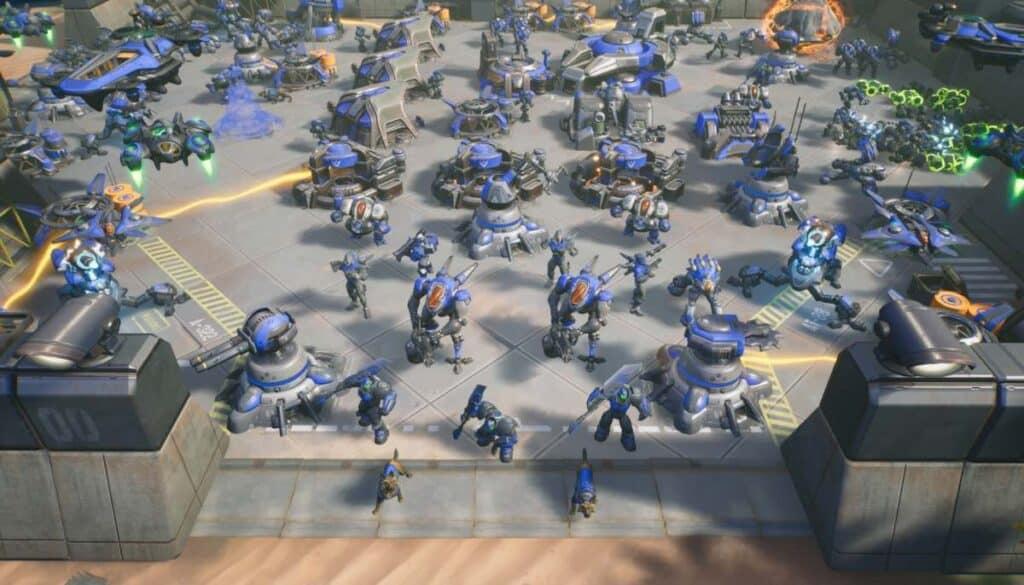
Stormgate arrived with a dream team of experienced developers and the audacious promise to revive the RTS genre. It was the most anticipated RTS game for years, with over $40 million in funding and backing from big names and developers.
However, what followed was a muddled Early Access rollout, overhyped expectations yet undercooked execution, and a game that struggled to find its identity. Frost Giant’s spiritual successor to StarCraft and Warcraft vision wasn’t realised, and without any divine intervention, it looks like the end is near for the game and the studio. What exactly happened?
Stormgate amassed $40+ million in funding
In 2020, ex-Blizzard veterans Tim Morten (StarCraft II) and Tim Campbell (Warcraft III: The Frozen Throne) founded Frost Giant Studios, intending to revive the real-time strategy (RTS) genre. Their experience and promise quickly attracted big investors to the project.
Backers included Riot Games, Bitkraft, Kakao Games, Global Founders Capital, and Griffin Gaming Partners. By mid-2024, Frost Giant had raised about $40 million, and social media giant Kakao was set to publish in South Korea.
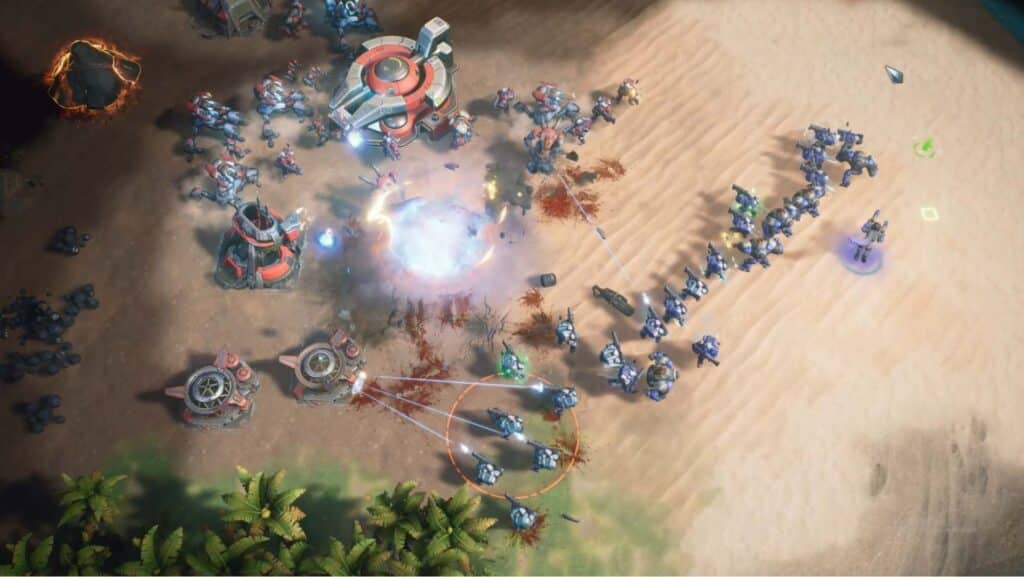
Stormgate was envisioned as the spiritual successor to StarCraft and Warcraft. The game would be free-to-play, but with optional paid content like campaigns, hero units, and cosmetics. While seasoned RTS veterans were undeniably a key demographic, the studio didn’t shy away from accessibility in this notoriously unwelcoming space.
Stormgate was built around four foundational pillars, which served as the ultimate goal for the game. A narrative-driven campaign, co-op play, competitive multiplayer, and user-generated content.
After a few years in development, the studio turned to fans for additional funding in 2024. A Kickstarter raised around $2.4 million from 28,000 backers. CEO Tim Morten insisted the game was “fully funded to release,” framing the campaign as pre-orders for collectables and beta access rather than completion money.
Backers were promised all Year Zero heroes during Early Access at no extra cost. Frost Giant said proceeds would mostly cover physical rewards, servers, and stretch goals, with any surplus going to development. The campaign doubled as a community pre-order for a Collector’s Edition, miniatures, and other merch.
Soon after, the team ran an equity round on StartEngine, raising about $1.2 million for marketing and runway amid a tight venture climate. In total, venture, Kickstarter, and StartEngine funding approached $43 million.
Throughout, Morten’s messaging stayed confident, assuring RTS fans that Stormgate would create the “Elden Ring moment” for the niche genre. With hindsight, those assurances set a bar that later events would challenge.
A rushed early access and disastrous launch
The pre-alpha preview of the game in 2023 already made a bad impression on interested players, yet many were still optimistic since it was early footage. Initial critiques of the cartoony art style or the game being a generic watered-down StarCraft clone were dismissed because of its alpha state. But Stormgate’s public debut in 2024 crashed under the weight of its expectations and promises.
Controversies quickly compounded the weak first impression. The pre-launch claim that the project was “fully funded to release” was later clarified to mean the Early Access release rather than a complete 1.0, signalling that continued development depended on sales and fresh capital.
If that wasn’t enough, review integrity and online discourse were tainted as some glowing Steam reviews and rebuttals were linked to Frost Giant staff accounts. A community director acknowledged posts made on their personal behalf, and a promised CEO statement never appeared. Brief promotion of a questionable third-party tool on the Steam page and allegations of heavy-handed forum moderation tanked their reputation.
Money woes
However, the biggest question was where the money was spent and how it was burned. According to Tim Morten, the biggest cost was simply the people making the game. Frost Giant grew to approximately 48 employees, including many industry veterans with competitive salaries in California.
Other notable costs included a $650,000 reveal cinematic for the trailer, a significant marketing push with sponsored streamers, developing another engine on top of Unreal Engine 5, and hiring staff to expand Stormgate with figurines, merchandise, and potential film or literary adaptations.
Overhyped and Underdelivered
The disastrous launch and PR fumbles evaporated any goodwill for the game, but this would be only a stain if the end product lived up to expectations. Even setting funding and PR aside, Stormgate struggled because the core experience wasn’t strong enough to win new players to the genre or retain a core RTS audience.
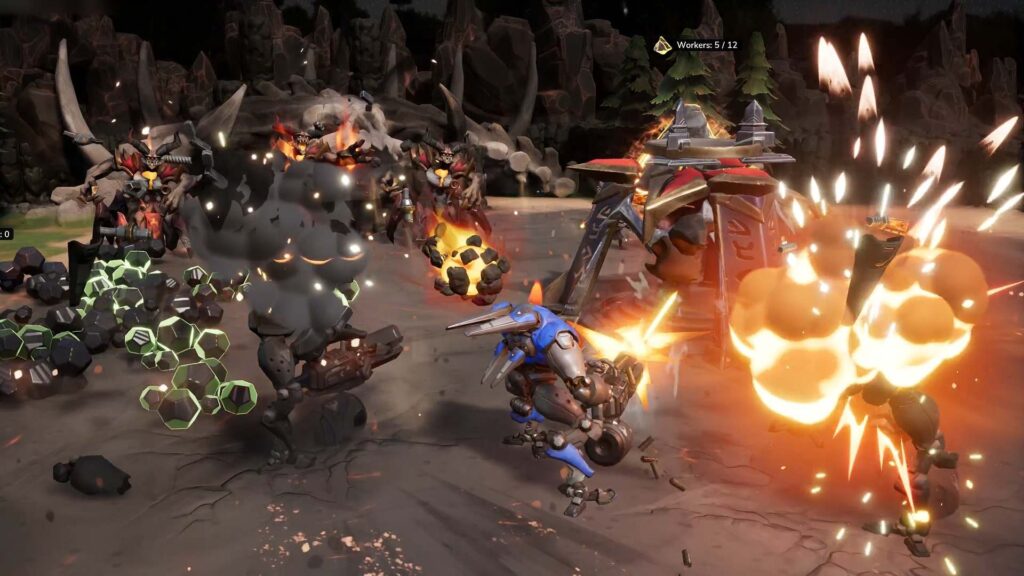
Moment-to-moment battles were often boring and generic. Engagements tended to collapse into straight-up trades rather than expressive skirmishes defined by sharp unit counters, positional play, or clutch abilities. Many players described ability kits as safe and faction identities as undercooked. The result wasn’t broken or offensive but rather unremarkable.
PvE didn’t pick up the slack. The early campaign’s writing and mission variety felt thin, and the lack of manual save/load (plus no offline play) clashed with single-player expectations. Stormgate’s campaign was so atrocious that they had to redo the experience from the ground up, yet even in its reworked state, it was still a generic experience with trivial challenge.
Co-op’s bones were there like clear roles, wave defence, escalating modifiers, but objective design and enemy behaviours were too simple to sustain a long grind, especially without the steady reward cadence successful co-op RTS modes relied on.
Technical and marketing missteps
Quality-of-life and polish gaps amplified those core gameplay issues. Players reported rough edges in UI/UX, audio mix, and general performance issues. None were catastrophic in isolation; together they produced friction in a genre where input feel, readability, and reliability were non-negotiable. However, bigger issues like dropped inputs hurt and clunky movement made PvP a slog.
The monetisation and structure further isolated its supporters. With a free-to-play shell and paid pieces (campaign chapters, heroes, cosmetics), Stormgate asked for money before it had earned enough goodwill back. The microtransactions were high and frequent, like with hero units and campaign bundles.
There was also the weight of advertising the game as the spiritual successor to StarCraft and Warcraft, two titans of the genre. That mantle cut both ways. The bold claim bought Stormgate a long look, but it also set a bar the game never cleared. Stormgate was too similar to StarCraft without introducing its groundbreaking ideas, refinements, narratives, or aesthetics to differentiate it. Simply put, the lack of identity and polish just made players want to play more StarCraft.
Stormgate’s bleak future
At its peak, it reached nearly 5,000 players in July 2024, but as of the time of writing (September 25), the game was barely topping 200 players. Frost Giant Studios is on the brink of collapse, and layoffs are inevitable and imminent.
Frost Giant has not formally declared bankruptcy as of this writing, and the servers remain technically online. But the outlook is grim. We know Stormgate generated only a tiny fraction of its development costs in revenue. With the game now having exited Early Access and still failing to find traction, there are few avenues left. Even if the studio somehow survives via layoffs and a skeleton crew, Stormgate’s future content (like the promised additional campaigns or factions) appears indefinitely on hold.
CEO Tim Morten has taken to LinkedIn to give honest feedback and insight on what happened to Stormgate. He frames the failure within a brutal market: oversaturation, fickle discovery, and players with less time. He also cites the capital crunch that squeezed mid-sized projects and forced hard trade-offs. To his credit, Morten admits a harsher truth: games fail because they’re not good enough, and responsibility is his for what happened to the anticipated title.
Conclusion
As of now, Stormgate’s future is bleak. Frost Giant Studios, barring a miracle, will likely downsize or shut down, and Stormgate’s servers could go dark, rendering even the single-player content unplayable. It’s a sobering outcome for a venture that raised so much money and hope.
Big names and big budgets aren’t a guarantee. When hype, promises, and expectations don’t meet the end product, even the most loyal fans are bound to be disappointed. Despite that, the anticipation and massive funding prove that the RTS is more than StarCraft, Warcraft, and Age of Empires, and there’s widespread interest in the genre, even if Stormgate won’t be the one to capture it.
FAQs
Has Stormgate flopped?
Stormgate has failed to meet commercial and critical success because of a disappointing launch. Frost Giant Studios is currently looking for new partners to save the company and the game.
Does Stormgate include pay-to-win transactions?
No, Stormgate does not have any pay-to-win transactions. Players can purchase heroes for the co-op mode, additional campaign missions, and cosmetics that don’t give an advantage.
What games is Stormgate most similar to?
Stormgate is most similar to StarCraft, with some elements of Warcraft, previous games the team has worked on.
References
- Crowdfunding: Crafting the Future of RTS Together : r/Stormgate (Reddit)
- Frost Giant (Reg CF) (StartEngine)
- Stormgate Gameplay Reveal (Pre-Alpha) – PC Gaming Show 2023 (YouTube)
- Frost Giant could make layoffs after Stormgate flops (Game Developer)