General
Last Updated:
France’s political turmoil and rising debt have shaken markets, weakening the euro and fuelling fears of a wider eurozone instability

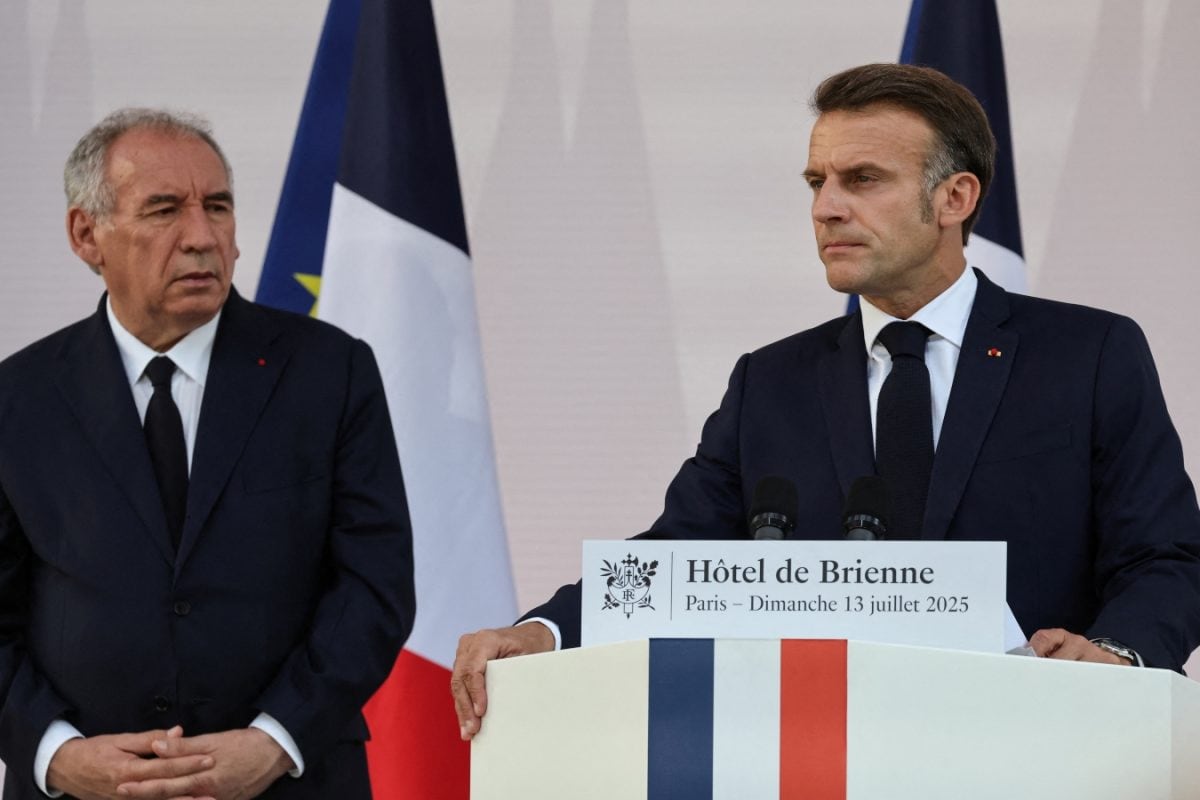
French President Emmanuel Macron
The euro weakened, and French borrowing costs surged on Monday (October 6) after Prime Minister Sebastien Lecornu resigned less than a month into office, throwing France into deeper political uncertainty. Lecornu’s shock departure came only hours after unveiling a largely unchanged cabinet, leaving investors worried about the government’s ability to manage the country’s growing debt crisis.
General Recommended Stories
In a surprising turn, Lecornu later agreed to President Emmanuel Macron’s request to devise a “stability plan” for the nation by Wednesday evening. The unexpected reversal capped a day of turbulence, with Paris stock markets falling sharply amid fears that the political gridlock could worsen France’s economic troubles.
Analysts say that if Lecornu’s plan fails, Macron may have no choice but to call fresh legislative elections, adding to the country’s instability.
France’s Debt Woes Deepen
Investor confidence in France—the eurozone’s second-largest economy—is deteriorating fast. The yield on French OATS government bonds climbed sharply, even surpassing those of Italy’s debt-laden BTP bonds for the first time since the euro’s launch in 1999. The gap shows how shaken markets are by France’s political and fiscal troubles.
With sovereign debt of about €3.35 trillion ($3.9 trillion)—nearly 113% of GDP—France now carries the largest national debt in the European Union. Economists expect it to reach 125% by 2030 if current trends continue. Its budget deficit, projected between 5.4% and 5.8% this year, is the highest in the EU, far above the bloc’s 3% target.
“Yes, we should be worried. The eurozone is not stable at this point,” warned Friedrich Heinemann, an economist at Germany’s ZEW Leibniz Centre. While he does not foresee an immediate debt crisis, he cautioned that “if a big country like France faces further political destabilisation, the risks grow.”
Markets Hope For ECB Rescue
Investors are counting on the European Central Bank (ECB) to step in and stabilise French bond markets. However, Heinemann warned that such hopes “could be misplaced, because the ECB has to be careful not to undermine its credibility.”
France already spends €67 billion a year just on interest payments. To meet EU deficit rules, it must either cut spending or raise taxes—both politically unpopular options.
Economists Pessimistic About Reforms
Heinemann and other analysts blame successive French governments and the European Commission for failing to enforce fiscal discipline. “It kept turning a blind eye when it came to France,” he said, adding that the country’s political polarisation makes major reforms unlikely.
Economist Andrew Kenningham of Capital Economics said the current turmoil is “mostly contained” but warned that “a worsening crisis in France could threaten the stability of the entire eurozone.”
As Europe’s political and economic divisions widen, France’s turmoil could not have come at a worse time — especially with the EU’s trade tensions with the United States flaring up once again.
General About the Author

Anushka Vats is a Sub-Editor at News18.com with a passion for storytelling and a curiosity that extends beyond the newsroom. She covers both national and international news. For more stories, you can follow her…Read More
Anushka Vats is a Sub-Editor at News18.com with a passion for storytelling and a curiosity that extends beyond the newsroom. She covers both national and international news. For more stories, you can follow her…
Read More
First Published:
October 11, 2025, 16:47 IST
News world Will France’s Political Meltdown Ignite A Eurozone Debt Crisis?
Disclaimer: Comments reflect users’ views, not News18’s. Please keep discussions respectful and constructive. Abusive, defamatory, or illegal comments will be removed. News18 may disable any comment at its discretion. By posting, you agree to our Terms of Use and Privacy Policy.
Read More