General

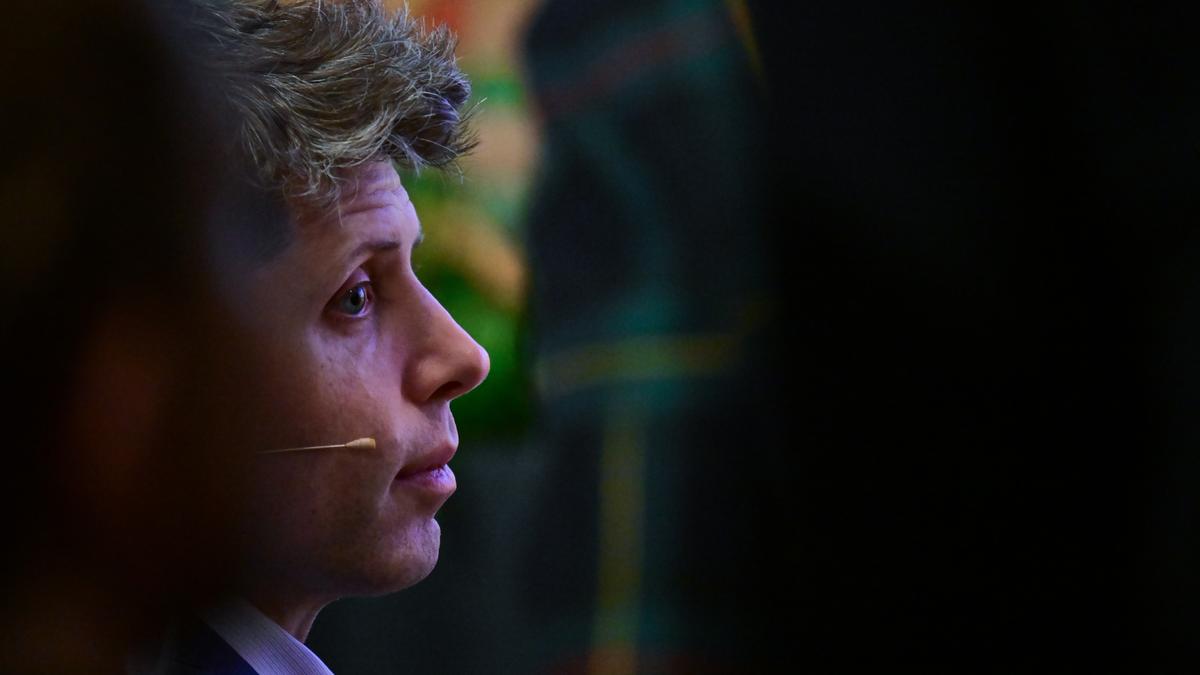
Sam Altman
| Photo Credit: Getty Images
Another day, another incendiary quote by Sam Altman, the co-founder and CEO of OpenAI since 2019. Recently, Altman claimed in an interview with the German newspaper Die Welt that AI-based systems would achieve ‘superintelligence’ by 2030 and within that time-frame, take over 40% of existing jobs. Hyperbole is Altman’s preferred mode of public discourse, so the claim by itself shouldn’t come as a surprise. What is surprising is that Altman’s supposedly apocalyptic timelines are becoming shorter and shorter even as whispers of an AI bubble are growing louder in the business world — the more strife OpenAI finds itself in, the taller Altman’s tales become.
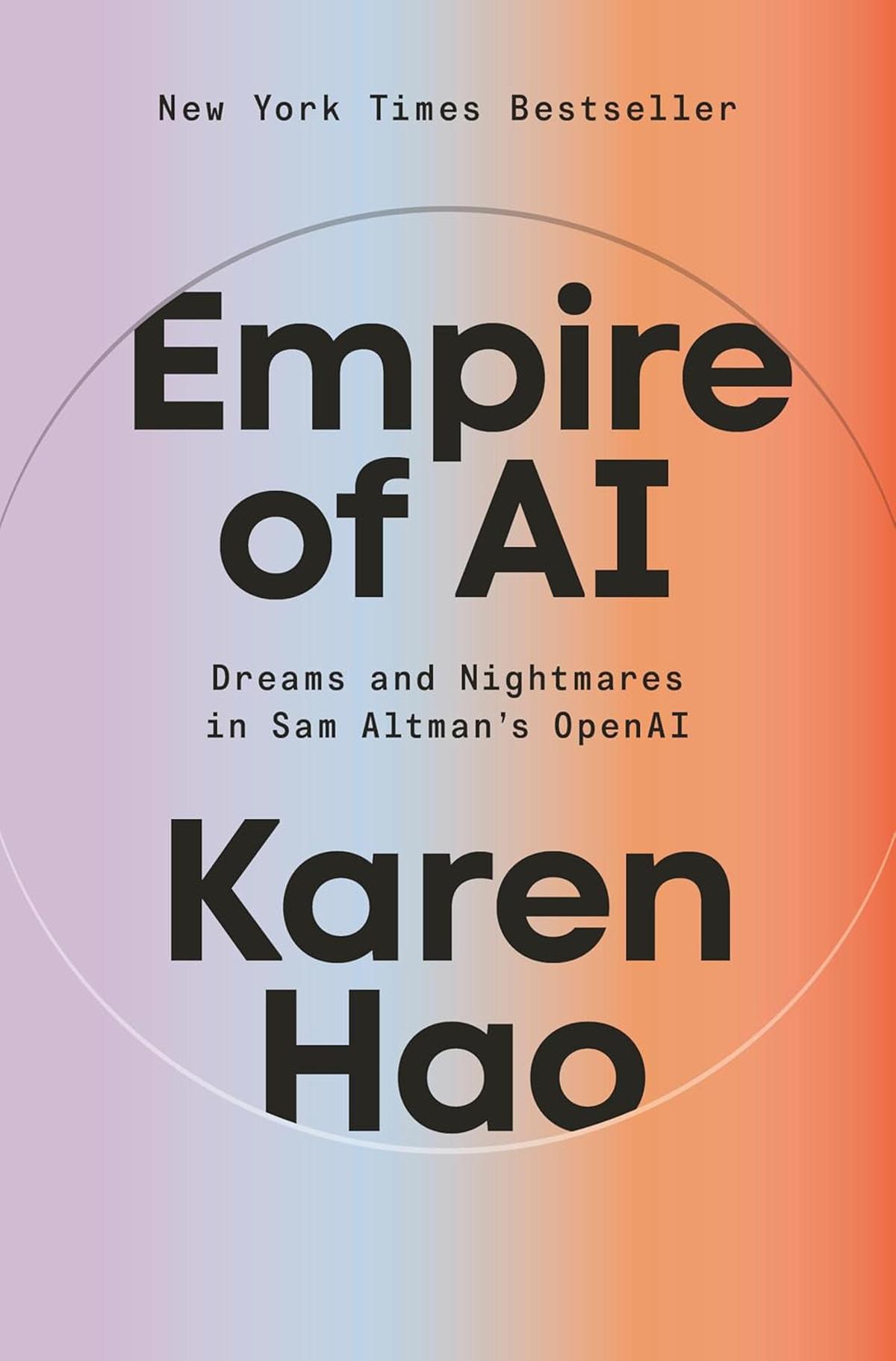
This is as good a time as any to delve deeper into the life and works of Altman, whose eventful stint as OpenAI CEO has been marked by controversies involving his personal and professional behaviour. A good starting point is a pair of recently released books — Keach Hagey’s The Optimist: Sam Altman, OpenAI and the Race to Invent the Future (W.W. Norton & Company), and Karen Hao’s Empire of AI: Dreams and Nightmares in Sam Altman’s OpenAI (Penguin).
Spotlight on the personality
Hagey’s book is the one with the narrower scope — for most of its length it remains laser-focused on Altman the person, as it follows him from his troubled childhood and youth, all the way up till the time he founds his first startup Loopt, his time at the helm of the startup incubator YCombinator and finally, of course, the inception of OpenAI. Some of the strongest sections in the book tackle Altman’s relationships with two of the most powerful people in Silicon Valley—Palantir founder Peter Thiel and, of course, Tesla and SpaceX founder Elon Musk. Certain passages, although well-reported and fact-checked, are written in a slightly tongue-in-cheek, almost salacious manner, like the passage about how Altman met his future husband Oliver in Thiel’s bathtub at 3 a.m.
Hagey writes at one point, “Optimism is the belief that human beings can be trusted to steer the future wisely. But trust is fragile currency.” That line is indicative of the tonality most of the book follows, painting Altman as a bit of a tragically flawed hero, an idealist who doesn’t fully understand the consequences of his choices and powers through difficult situations with sheer force of will and a talent for manipulating others.
Flawed business model
Karen Hao’s Empire of AI is by far the superior book, one that not only captures the essence of Altman but also contextualises his rise amidst the larger picture i.e., Silicon Valley’s trajectory in the 21st century. Hao is also far more critical of Altman than Hagey is. In the sections describing Altman’s short-lived ouster from OpenAI and his subsequent reinstatement, Hao paints him as a Machiavellian leader, highly skilled at getting people to come around to his point of view, someone likely to lash out in a vicious way if he felt an employee or a colleague wasn’t sufficiently loyal.
More important are Hao’s conclusions about OpenAI’s business model and the way the company is run at a day-to-day level. Empire of AI likens OpenAI and its peers as a sort of contemporary neo-colonial power structure. In previous centuries, big mining firms were aligned with British colonial governments around the world—resources were systematically extracted from the poor and used to further enrich the already super-wealthy. Today, OpenAI and others like Perplexity insist that they have the right to access every book, song or movie ever written, that they should get all of this free of cost because of some vague notion of collective scientific and technological progress.
Hao writes: “Over the years, I’ve found only one metaphor that encapsulates the nature of what these AI power players are: empires. During the long era of European colonialism, empires seized and extracted resources that were not their own and exploited the labour of the people they subjugated to mine, cultivate, and refine those resources for the empires’ enrichment. They projected racist, dehumanising ideas of their own superiority and modernity to justify—and even entice the conquered into accepting—the invasion of sovereignty, the theft, and the subjugation.”
As the passage above demonstrates, Hao demolishes these notions in style—as indeed they should be. These are multi-billion-dollar firms asking for handouts, and they have the audacity to claim that this would be for ‘the greater good’. Historically speaking, whenever large corporate firms have asked us to ignore the rules (in this case, copyright law), it has turned out very, very badly for society. These two books are a powerful reminder that we cannot afford to make the same mistakes all over again.
Empire of AI: Dreams and Nightmares in Sam Altman’s OpenAI
Karen Hao
Penguin
₹2,899
The Optimist: Sam Altman, OpenAI and the Race to Invent the Future
Keach Hagey
W.W. Norton & Company
₹2,835
The writer and journalist is working on his first book of non-fiction.
Published – November 28, 2025 06:00 am IST